KNOWLEDGE BASE
Everything you need to know about laptop batteries, specifications, usage, maintenance and more. Clear answers to common customer questions.
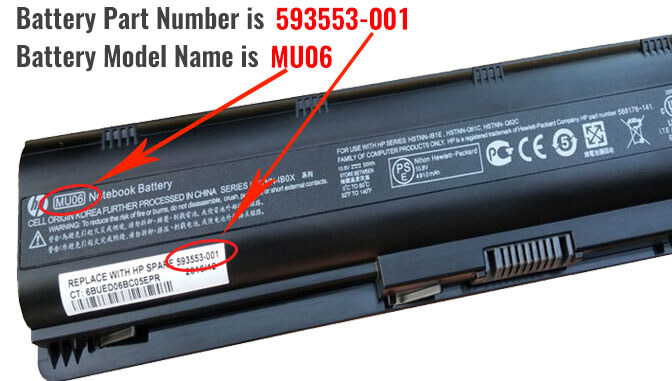
A part number is a unique code that specifically identifies an inventory item.
This code helps us quickly locate and identify the exact product you need, without requiring extra details like machine model, brand, size, or production information.
It’s the most important identifier when matching a replacement battery for your laptop.
Battery capacity refers to the amount of electrical energy the battery can store, measured in mAh (milliAmpere-Hours).
The higher the mAh rating, the more power the battery holds and the longer your laptop will run on a single charge.
For portable devices used for long hours, high-capacity batteries are always preferred.
Volt (V) measures electrical pressure/force supplied by the battery.
Different chemistries have different voltages:
• NiCd / NiMH: 1.2V
• Li-ion: 3.6V / 3.7V
Important: Your replacement battery must match your device’s required voltage. Mismatched voltage will cause malfunction or permanent damage.
No. Li-ion batteries do NOT suffer from memory effect.
Memory effect is a problem that reduces battery capacity and only affects nickel-based batteries like NiCd and NiMH.
This is one major reason why lithium batteries are the best choice for modern laptops.
Self-discharge is when a battery loses charge while not in use.
All batteries self-discharge over time, influenced by temperature and humidity.
Self-discharge rates:
• Li-ion: 5% per month (lowest)
• NiCd: 20% per month
• NiMH: 30% per month
A cycle = one full charge + one full discharge.
Cycle life is the total number of charge-discharge cycles a battery can handle before its performance drops significantly.
Each cycle reduces maximum capacity slightly over time.
Battery life describes how long a battery lasts before it needs replacement.
Li-ion batteries typically last 500 cycles, which translates to 2 years of normal use.
Actual lifespan depends on usage habits, temperature, and charging patterns.
Follow these rules to extend battery life:
• Store in a cool, dry place
• Keep away from heat and metal objects
• Discharge to 40% before storage
• Do not store for more than 3 months without recharging
• Remove battery from laptop if storing long-term
1. Power off and remove the battery from your laptop
2. Check the label on the battery itself
3. You will find these key info:
• Chemistry (Li-ion)
• Voltage (e.g. 10.8V)
• Capacity (e.g. 4400mAh)
• Part Number (e.g. 593553-001)
• Model (e.g. MU06)
This information ensures you buy the correct replacement battery.